
From Surge Chaos to Steady Bookings
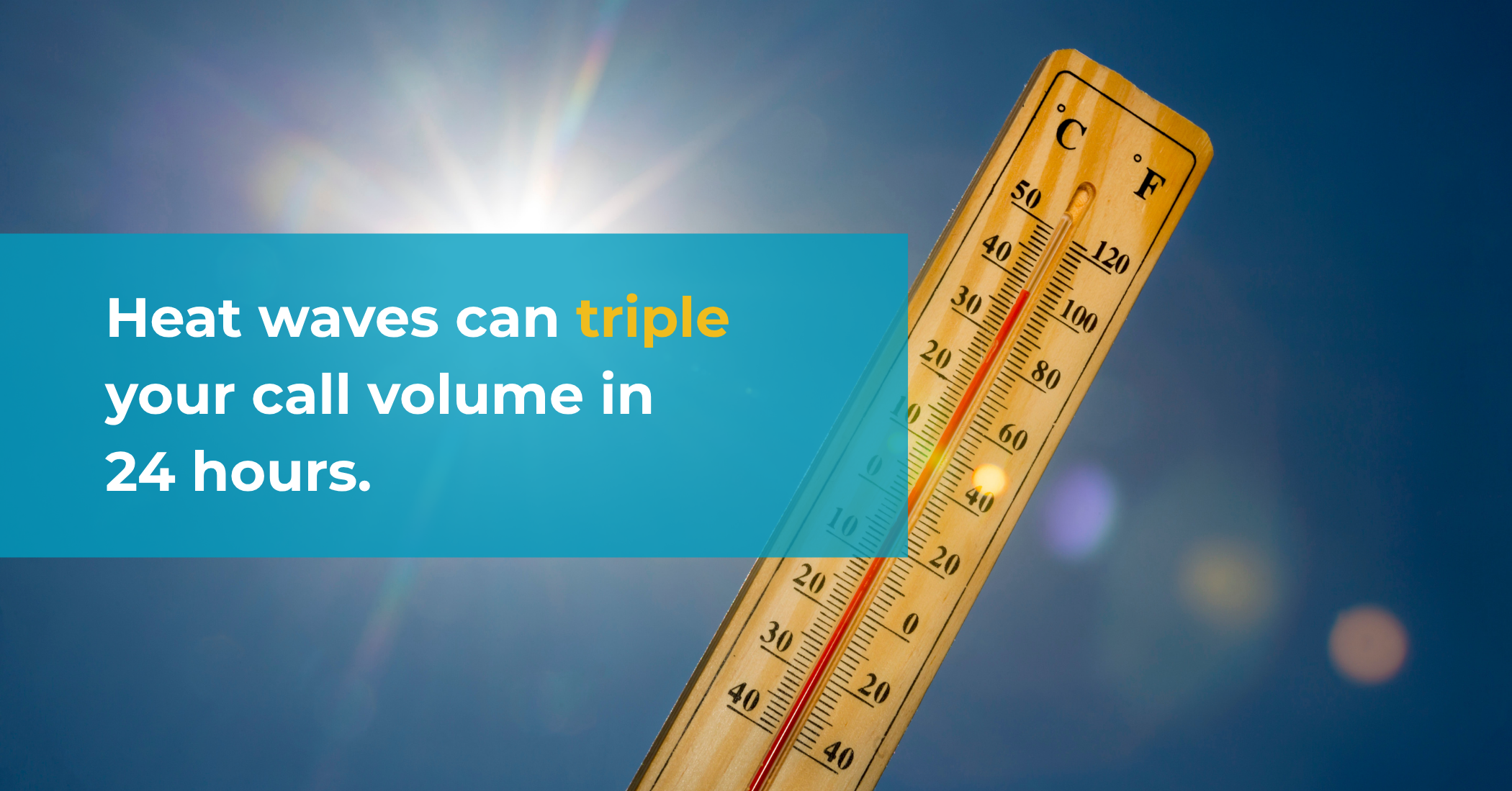
A furnace and an air conditioner fail the same way a dam fails. Nothing happens for months, pressure builds quietly behind the scenes, and then the first heat wave of the season arrives and everything gives way at once. One 90-degree week can turn a normal call volume into three or four times the usual load, and the calls don’t spread out politely across the week. They arrive in the first 48 hours, all wanting the same thing: someone there today.
HVAC Customer Pain Points
External Pain Points: Your crews are already stretched across a full board of jobs, the phone rings nonstop, and every unanswered call is a homeowner without air conditioning who is now calling the next number on the list. Local news coverage of a recent heat wave described technicians working ten-hour days just to keep pace, and that’s before accounting for the calls nobody had time to pick up at all.
Internal Pain Points: The internal problem shows up in an owner’s stomach more than their spreadsheet. It’s the specific dread of watching the phone light up during a heat wave while every technician is already on a roof or under a unit, knowing that each ring represents a customer deciding, right now, whether this company deserves a callback or a search for a competitor.
Philosophical Pain Points: A crew that built its reputation on showing up shouldn’t lose that reputation because the busiest week of the year is also the week nobody could get to the phone. Growth shouldn’t require betting the whole season’s revenue on whether the office manager can answer two lines at once.
Outcomes for HVAC Company that Utilizes Human + AI Systems
Turn each of those around and the season changes shape entirely. Instead of dropped calls during the exact week that matters most, every ring gets triaged the moment it comes in, with true emergencies flagged and routed before a technician even checks their phone. Instead of a knot in the stomach every time the temperature climbs, an owner gets a real-time view of what’s coming in and how it’s being handled. And instead of a reputation built over years getting tested by one bad week, the crew’s name stays associated with reliability, heat wave or not.
Action Steps: Preparing for the Surge Season
Getting ready for surge season takes preparation before the first hot day arrives, not scrambling once it does.
Start by mapping last year’s surge. Pull call volume from the hottest week of last summer and compare it to a normal week. That gap is the exact capacity a business needs to plan around this year.
Next, put triage in front of every call. A trained team, backed by AI, should separate a no-cool emergency from a routine maintenance question in the first thirty seconds, so technicians spend their day on the calls that actually need them today.
Then connect scheduling directly to the field. Integrations with platforms like ServiceTitan mean a booked call lands straight on a technician’s board instead of sitting in a notepad waiting for someone to transfer it over.
After that, build an after-hours plan. Surge calls don’t stop at 5pm, and a dispatching and after-hours plan built ahead of time keeps a homeowner without air conditioning from waiting until Monday morning.
Finally, review the data weekly during peak season. A surge lasts days, not a full billing cycle, and a team that checks in weekly can shift staffing before a bad week becomes a bad month.
What Happens From Here
Handled this way, the busiest month of the year becomes the best month of the year. Every call gets triaged and scheduled the moment it lands, technicians stay focused on the work only they can do, and a reputation built over years survives its toughest test yet.
Left unaddressed, the pattern repeats every summer: the same surge arrives, the same calls go unanswered, and the business quietly hands its busiest week to whichever competitor happened to pick up the phone.
More posts from the team at Call Experts:
- Construction Company Answering Service: Why a Missed Call Costs You the Next BidGo from Missing Bids to Answering Every Opportunity A building and a business hold up the same … Read more
- Plumbing Answering Service Guide: How to Handle the Fall Call Surge Before Winter HitsFrom Missed Emergency Calls to Every Job Booked, Day or Night A pipe and a business fail … Read more
- Virtual Receptionist Service vs. Call Handling Service: Why Growing Businesses Choose Human + AI SupportFrom Missed Opportunity to Steady Growth Picture an air traffic control tower at a busy regional airport. … Read more
- HVAC Answering Service Guide: How to Handle Summer’s Surge Without Losing a CallFrom Surge Chaos to Steady Bookings A furnace and an air conditioner fail the same way a … Read more
- The Storm-Season Phone Continuity ChecklistStay reachable when summer demand and storm season hit. Peak demand is foreseeable. The businesses that stay … Read more